Maile Jewelry Meaning: The Plant Behind the Design
- Maile jewelry references a real plant and living practice
- What does maile mean in Hawaiian?
- What the maile plant looks like
- Maile and lei are more than a necklace shape
- Why “What does it symbolize?” needs a source
- Read a jewelry description in three layers
- “Maile-inspired” is often the clearest phrase
- Hawaiian spelling is part of the meaning
- Ask who made the piece and how
- Give and wear the piece without performing expertise
- A respectful meaning is allowed to stay specific
- Sources
Maile jewelry references a real plant and living practice
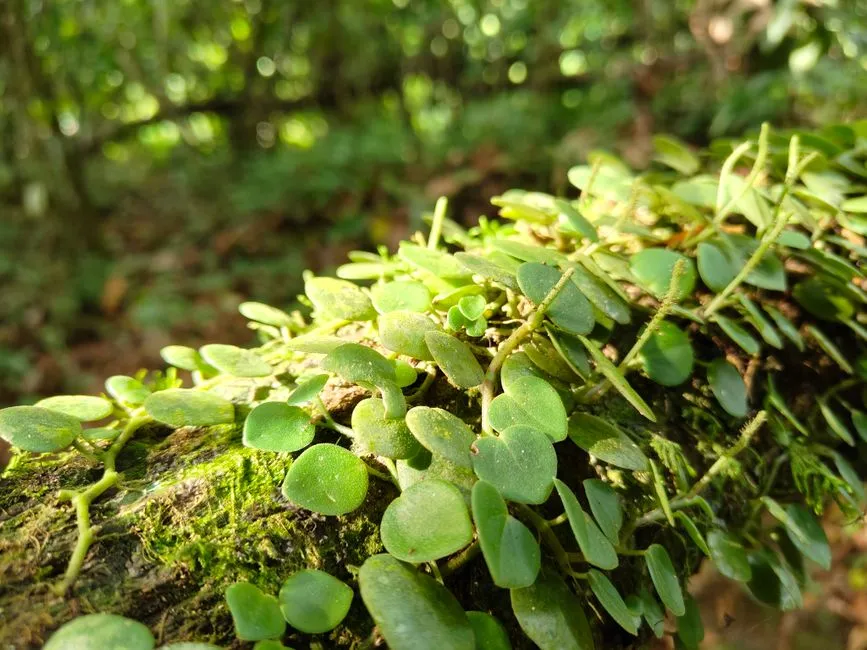
Maile jewelry usually takes its leaves, paired clusters, or trailing line from maile, a fragrant indigenous Hawaiian vine or shrub long valued in lei making. That context matters, but it does not give every metal leaf one automatic symbolic meaning. The significance of a particular piece may come from its maker, giver, occasion, family, or wearer; respectful interpretation begins by asking which of those voices is speaking.
That answer is less tidy than a “one leaf equals one emotion” chart, but it keeps personal interpretation separate from documented cultural context.
What does maile mean in Hawaiian?
In Hawaiian, maile is the name of the plant. The UH Hilo Hawaiian dictionary entry describes a fragrant-leaved twining shrub used for decorations and lei, especially on important occasions. It does not define maile as a one-word synonym for love, strength, protection, success, or another retail-ready virtue.
The University of Hawaiʻi Native Plants profile identifies the plant as Alyxia stellata and indigenous to Hawaiʻi. Meaning can extend through a particular lei practice, maker, gift, family history, or occasion, but that meaning needs an identified speaker and context. For jewelry, the accurate short answer is “a design inspired by maile,” followed by the maker’s own explanation—not a universal symbol pasted onto every leaf.
What the maile plant looks like
Maile belongs to the genus Alyxia. The UH Native Plants profile uses Alyxia stellata as the accepted name and lists Alyxia oliviformis as a synonym. For a jewelry reader, the useful point is not winning a botanical naming argument at dinner. It is recognizing that maile is a specific plant, not a generic label for any elegant tropical leaf.
It can grow as a twining vine, scrambling shrub, or small upright shrub. Leaves occur in groups along the stems, and recognized forms vary in leaf size, shape, and fragrance. The flowers are small and less visually dominant than the foliage. The UH profile attributes the familiar scent to bruised or crushed leaves and notes the sweet scent of stripped bark.
Jewelry makers may simplify that form into smooth paired leaves, pointed ovals, small clusters along a chain, or an engraved vine. Stylization is normal. A goldsmith is building a wearable object, not filing a herbarium specimen. Still, a listing that intentionally uses the name maile should be able to explain what part of the design refers to the plant.
Maile and lei are more than a necklace shape
The University of Hawaiʻi’s Hana Lei cultural-practice resource describes lei making as a living practice whose styles depend on the material; examples include flowers, leaves, ferns, seaweed, shells, and feathers.
Maile has long been prized for lei. UH Native Plants describes maile lei as worn open and draped, and records their use for weddings, high-school and college graduations, and other special occasions. Those present-day uses show a continuing practice rather than a finished historical artifact.
A necklace inspired by that drape can acknowledge it. It cannot become an actual maile lei simply because its links go around a neck. Real lei involve material, making, giving, wearing, relationships, and context. Metal jewelry has its own craft and can carry its own meaning, but respectful writing does not flatten the two into one convenient retail category.
Why “What does it symbolize?” needs a source
Symbolism claims can come from several different places:
- Documented cultural context: information preserved by Hawaiian-language, educational, cultural, or community sources.
- A maker's design intent: what an artist chose to express through one particular piece.
- A giver's message: the reason one person chose the object for another.
- A family's practice: meaning established through shared history or inheritance.
- A seller's marketing copy: a commercial claim, which may or may not identify its basis.
These sources are not interchangeable. A maker can say, “I designed these leaves to represent the people who supported me.” That statement is valid as the maker's meaning. It does not automatically establish that all maile leaves have always represented support throughout Hawaiian culture.
Similarly, a wearer may associate a maile-inspired bracelet with a graduation because it was given on that day. The personal association is real without needing to become a universal rule. Specificity protects meaning; it does not shrink it.
Read a jewelry description in three layers
First, find the observable design claim. Does the piece show linked leaves, a vine, engraved foliage, or a pendant shaped like one leaf? Good descriptions tell you what the motif is doing instead of beginning with a cloud of symbolism.
Second, find the attributed context. Does the maker explain that maile is used in lei and identify where its information comes from? Does a Native Hawaiian artist describe their own relationship to the form? Are personal meanings labeled as personal?
Third, separate the material disclosure. Cultural language does not reveal whether the object is solid gold, sterling silver, gold-filled, vermeil, or base metal. Our metal guide for Hawaiian jewelry handles that question. A respectful origin story and a precise quality mark should coexist; neither substitutes for the other.
Be cautious when a listing supplies an elaborate legend with no source, uses Hawaiian words inconsistently, or implies that buying the piece grants spiritual protection, identity, or authority. You do not need to disprove every sentence to decide that unsupported certainty is not a buying feature.
“Maile-inspired” is often the clearest phrase
Calling a design “maile-inspired” does useful editorial work. It identifies the reference while allowing room for stylization. It does not claim the necklace is a lei, the metal leaves are botanically exact, or the object carries every meaning associated with maile in every context.
That wording also invites a maker to become more specific: inspired by the paired leaves, the open drape, a particular experience, or a family story. Precision makes the design more interesting. Vague grandeur mostly makes it harder to know what anyone means.
In a Hawaiian necklace buying guide, maile-inspired linked leaves work as a configuration because their repetition can form a flowing botanical line. That is a design observation. Whether a specific necklace marks love, achievement, welcome, remembrance, connection, or something else should come from the people and context attached to that piece.
Hawaiian spelling is part of the meaning
Hawaiian uses the ʻokina, a consonant represented by a turned comma-like mark, and the kahakō, a macron over a vowel. These are not optional decoration. They can affect pronunciation and meaning.
The word maile does not take an ʻokina or kahakō in the standard dictionary spelling. Other Hawaiian words and names may. The University of Hawaiʻi’s current Hawaiian-language guidance says correct orthography is essential and identifies the ʻokina as a specific character, not an apostrophe or decorative tick. If a necklace includes a name, phrase, place, or inscription, preserve the spelling supplied by a knowledgeable source or the recipient.
For an unfamiliar word, consult a reliable Hawaiian-language dictionary or a fluent practitioner. Confirm capitalization, spacing, diacritical marks, and the exact inscription in writing before production. An engraver can reproduce a verified phrase; they should not be expected to reverse-engineer your linguistic intentions from a cropped screenshot.
Ask who made the piece and how
If cultural relationship or local production matters to you, request specific information. “Hawaiian jewelry” may refer to motif, style, designer identity, place of manufacture, seller location, or marketing category. It does not prove all of those at once.
Useful questions include:
- Who designed the motif?
- How does the designer describe their relationship to maile or lei practice?
- Where was the piece fabricated, cast, engraved, assembled, and finished?
- Is the design original to this maker or sourced from a catalog?
- Which claims are cultural context, and which are the maker's interpretation?
- Does any community, practitioner, or source receive attribution?
Answers can be modest and still meaningful. A designer who says, “This is my contemporary botanical study based on photographs of maile leaves” is giving you clearer provenance than a seller who offers three paragraphs of cosmic certainty and no human name.
Give and wear the piece without performing expertise
When giving maile-inspired jewelry, explain why you chose it in your own words. You might admire its trailing leaf design, connect it with a shared time in Hawaiʻi, or choose it because the recipient wears botanical forms. If the gift belongs to a family or cultural occasion with established protocol, ask people involved what is appropriate.
When receiving a piece, let the giver explain it. When wearing one, you can accurately call it maile-inspired jewelry and name its maker. You do not need to claim that the object gives you a Hawaiian identity, replaces a lei, or makes you an authority on lei culture.
Treat an inherited piece with additional care. Record who owned it, what they called it, when it was given, and any story attached to it. Do not “improve” a Hawaiian word in an inscription without understanding the original. A qualified jeweler can document marks and condition before cleaning or repair; our care guide for Hawaiian jewelry explains why material and construction come first.
A respectful meaning is allowed to stay specific
Maile jewelry begins with a recognisable reference: a fragrant Hawaiian plant valued in lei making. From there, the meaning branches. Documented cultural context belongs to its sources. A maker can explain their stated design intent. A giver can explain their message. A family can explain its own history. A wearer can hold personal association without declaring it universal tradition.
That is not an evasive answer. It is a better one. Ask what the design references, who made it, why it was given, and what evidence supports the description. Meaning becomes richer when it has an identified speaker and a specific context.